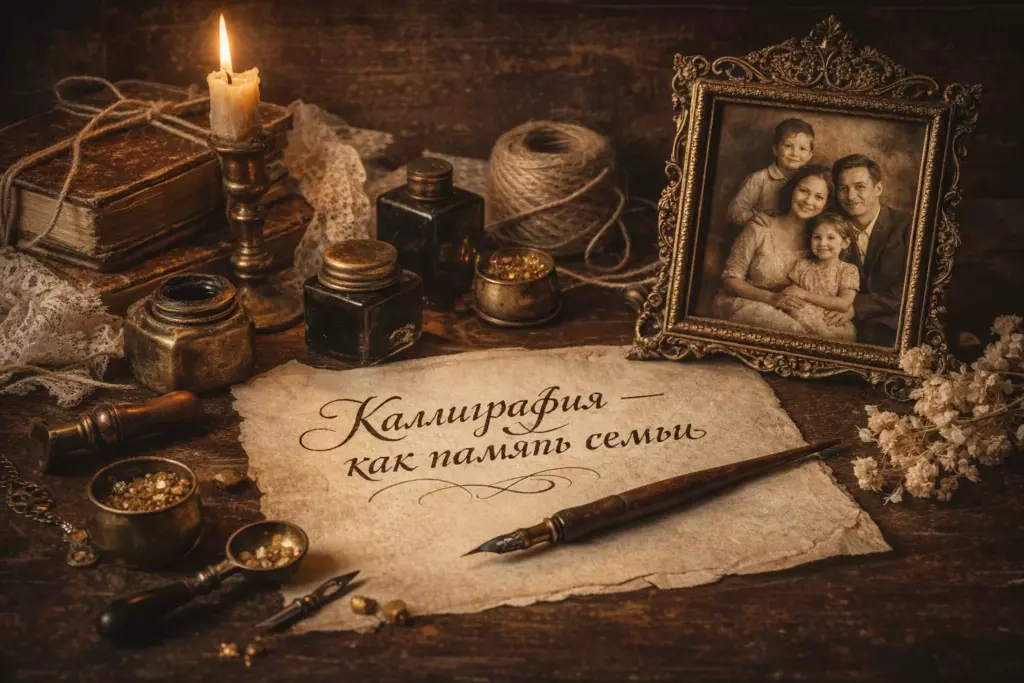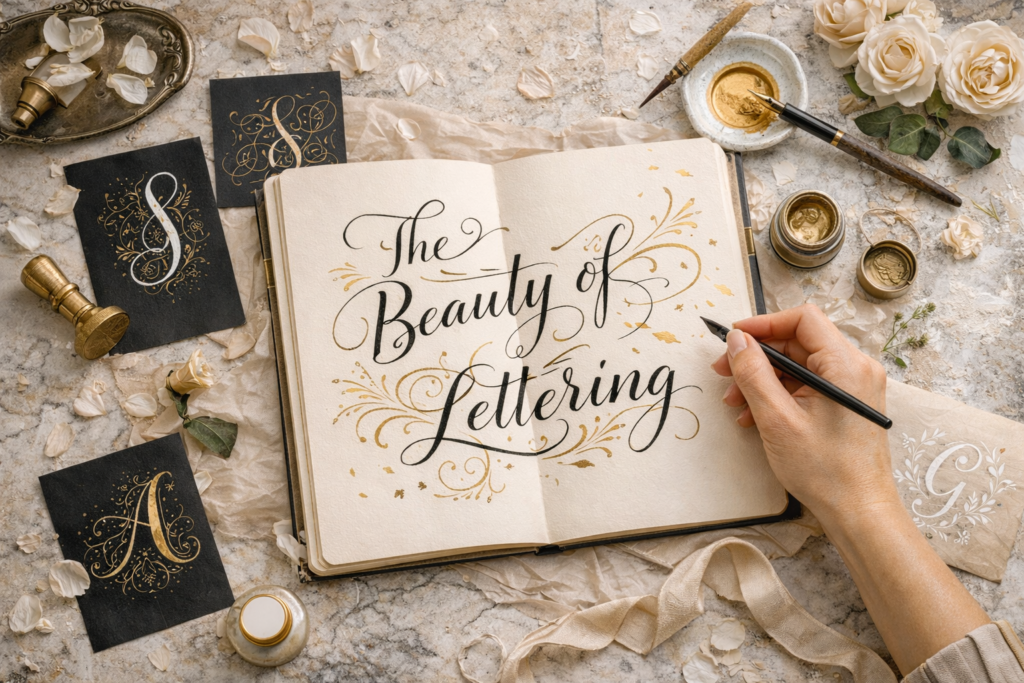
In the digital era we produce an enormous amount of text, but very little of it carries the weight of a human trace. Messages disappear, notes are forgotten, and photographs dissolve into endless archives. Against this background, calligraphy becomes meaningful as a way of preserving family memory in a form that feels tangible and lasting.
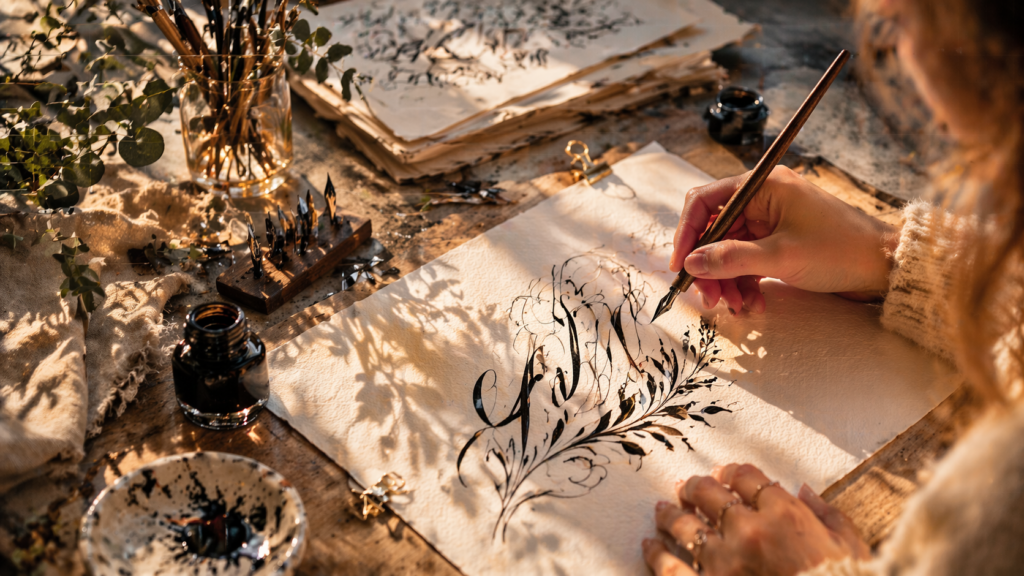
A handwritten line always keeps more than information. It preserves movement, pressure, hesitation, and emotional tone. That is why old postcards, inscriptions in books, and notes on photographs touch us so strongly: they allow us to feel presence, not only read a message.
Modern calligraphy can give new life to family archives. A sentence from a letter, a name from a diary, or a caption from an old photograph can become a framed artwork, a keepsake print, or part of a family album. In this way memory stops being a dry archive and begins to speak emotionally again.
Calligraphy returns weight to writing and form to remembrance. It helps preserve not only facts, but also the feeling that someone truly existed, spoke, loved, and left a living mark.